
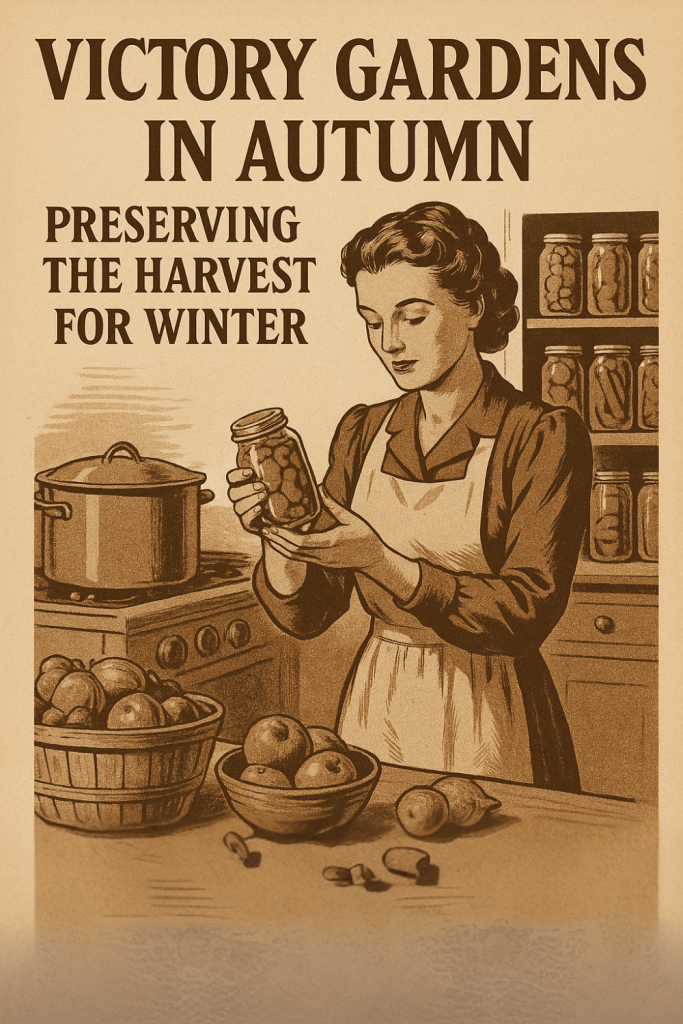
Victory Gardens in Autumn: Preserving the Harvest for Winter
Autumn has always been a season of both beauty and preparation. The air cools, leaves turn gold and crimson, and gardens overflow with their final gifts of the year. But for women in 1942, autumn wasn’t simply a picturesque season—it was a time of serious responsibility. Their families depended on them to preserve food, stretch rations, and prepare for winter in the shadow of war.
Today, while we may not live with ration books tucked inside our kitchen drawers, there is wisdom in looking back. The practices of the 1940s—canning, root cellars, careful meal planning—offer not only practical lessons but also inspiration for a slower, more intentional way of living.
A Season of Urgency in 1942
During World War II, the U.S. government encouraged families to grow Victory Gardens as a way to supplement scarce food supplies. By 1942, nearly 20 million American households were tending backyard plots, community gardens, and even small patches in city parks.
But growing the food was only the beginning. Come autumn, women faced the pressing task of making those harvests last through winter. With sugar, butter, canned goods, and meat rationed, self-sufficiency became essential.
Imagine a kitchen in October 1942:
- Jars of peaches lined the counters, cooling under dish towels.
- Onions and carrots were laid out in baskets destined for the root cellar.
- Pressure canners rattled on the stove, filling the air with the scent of tomatoes.
- Children helped peel apples, their hands sticky with juice, while mothers worked in aprons dusted with flour.
This wasn’t optional work—it was survival. Each jar, each root vegetable carefully stored, was a promise of security for the months ahead.
The Art of Preservation
Canning Days
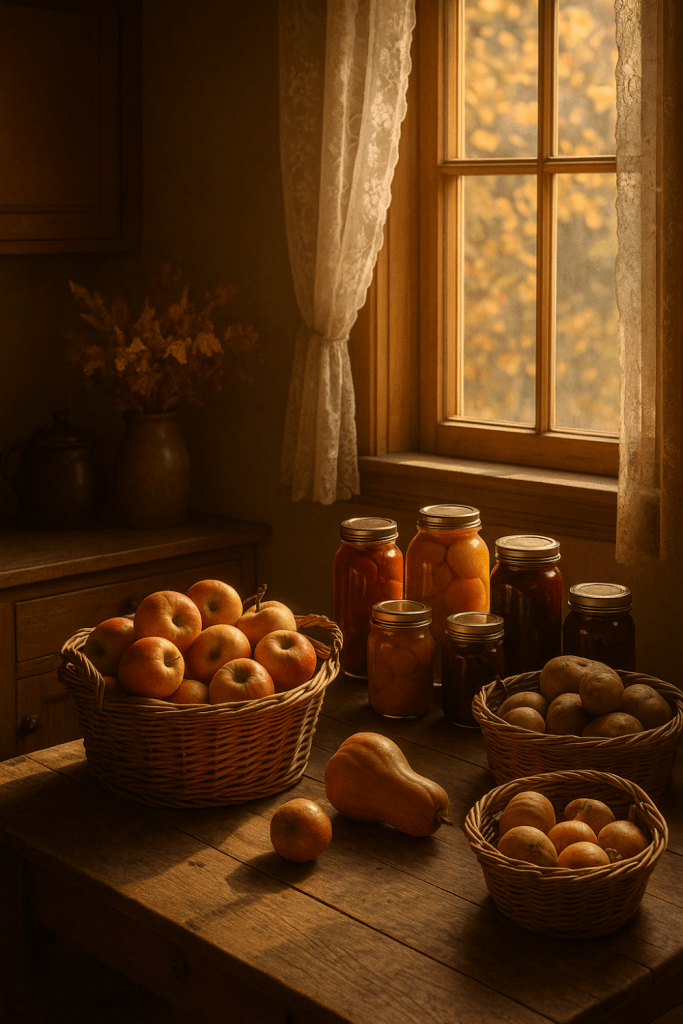
Women often gathered together to can in groups, turning the work into a social ritual. One neighbor might bring tomatoes, another beans, another peaches. They shared not only produce but also recipes, jars, and the sense of satisfaction that came with seeing shelves fill.
Root Cellars
Families without electricity relied on cool storage underground. Potatoes were stacked in straw, carrots layered in damp sand, apples wrapped individually in paper to keep them crisp. These cellars were more than storage—they were insurance against hunger.
Stretching Rations
Scarcity sparked creativity. Cookbooks of the era offered recipes like “Victory Sponge Cake” sweetened with honey or corn syrup instead of sugar, and “Wartime Stew” that used more vegetables and less meat. Nothing was wasted: stale bread became bread pudding, apple peels became jelly, and bones simmered into broth.
Through these methods, women created abundance out of limitation.
The Spirit of Resilience
Preserving the harvest in autumn wasn’t just about food—it was about morale. Government posters reminded families: “Can all you can. It’s a real war job!”
But beyond the patriotic slogans, there was something deeply personal happening in those kitchens. Women were carving out stability in uncertain times. They were creating order, comfort, and continuity for their families. In the midst of global chaos, a pantry lined with jars became a quiet victory.
This spirit of resilience is something we can carry forward today.
What We Can Learn Today
While most of us no longer rely on a root cellar or ration book, the lessons of 1942 feel surprisingly modern. In fact, they resonate strongly with the growing desire for slow living and mindful simplicity.
- Preserve the Season’s Bounty
Even if you don’t grow your own food, a trip to the farmers’ market can provide enough tomatoes, cucumbers, or apples for small-batch canning. Freezing herbs, drying fruit, or making a few jars of jam brings the satisfaction of carrying summer into the colder months. - Keep a Simple Pantry
Stocking essentials like oats, rice, flour, beans, and seasonal produce reduces dependence on convenience foods and gives you freedom to cook with what’s on hand. - Value the Everyday Rituals
Cooking from scratch isn’t just about the food. Kneading dough, stirring soup, or roasting vegetables slows us down. These acts remind us that nourishment takes time, and that time itself can be comforting. - Waste Less, Use More
Vegetable scraps become broth. Leftover grains turn into salads. Bread past its prime can be toasted, cubed, or baked into pudding. These old practices are timeless in their practicality. - Plan with Intention
Women of the 1940s had to plan carefully around ration books. Today, planning is just as valuable—not for scarcity, but for sanity. A weekly rhythm to meals helps reduce stress, saves money, and keeps kitchens calmer.
Creating Atmosphere: Then and Now
In the 1940s, kitchens were alive with the sounds of canning kettles and the chatter of family. The work was steady, sometimes exhausting, but there were ways women made it comforting too. A pot of tea on the table, music from the radio, or neighbors dropping in for a chat—all added a sense of warmth.
Today, we can bring our own atmosphere into these autumn rituals. For me, lighting a stick of autumn incense as I chop vegetables or simmer broth transforms the kitchen into something softer, calmer. It turns work into ritual, echoing the sense of rhythm that women of the 1940s knew so well.
Planning as a Heritage Skill
If there’s one thread that connects kitchens of the 1940s to our kitchens today, it’s planning. Women in 1942 had to think ahead—stretching every ration point, sketching out meals for the week, and making sure shelves stayed stocked through the long winter. Their notebooks were full of recipes, careful lists, and reminders that helped them stay steady when resources were tight.
That principle hasn’t changed. A calm, well-prepared kitchen still depends on foresight. Whether it’s setting aside time to map out meals, keeping a running list of pantry staples, or organizing what’s already on hand, the rhythm of planning is what turns daily cooking into something manageable instead of overwhelming.
That’s why I lean on a weekly meal planner in my own home. It’s a modern version of those old ration notebooks—something you can purchase in my shop if you’d like to bring that same sense of order into your own kitchen. Not flashy, not trendy—just a steady tool to support the quiet work of feeding yourself well.
A Modern Victory Garden
We may not face wartime rationing, but we face our own kind of shortages—time, energy, attention. The wisdom of Victory Gardens and autumn preservation offers a path back to something grounding. By slowing down, stocking pantries with care, and turning kitchens into spaces of ritual, we reclaim some of what has been lost to speed and convenience.
And perhaps that’s the greatest victory of all: finding abundance in simplicity, and turning ordinary routines into something meaningful.
✨ Carry the spirit of 1942 into your own kitchen. Light a stick of my autumn incense as you cook or plan your week, and let the season settle around you. And if you’re ready to take planning seriously, my Weekly Meal Planner download (available in my shop) is here to support your rhythm—practical, steady, and rooted in heritage wisdom.
Discover more from Naturing Relaxation
Subscribe to get the latest posts sent to your email.

 Naturing Relaxation